Tranexamic Acid for Sensitive Skin: Does It Help Age Spots Without Irritation?
Tranexamic acid has earned a solid reputation because it targets one of the hardest skin issues to fade: uneven pigment that lingers after sun exposure, inflammation, or just time. If you’re dealing with age spots and your skin throws a fit whenever you try a strong brightening product, that matters. A lot. The usual pigment-fading suspects can work, but they can also sting, peel, and push sensitive skin straight into redness. Tranexamic acid tends to be gentler, which is exactly why people with reactive skin keep circling back to it.
Here’s the basic idea. Tranexamic acid helps interrupt the signals that push skin into overproducing melanin, the pigment that makes age spots look darker and more obvious. It isn’t an exfoliating acid in the way glycolic acid is, so it usually doesn’t come with that same “my face feels overcooked” problem. That doesn’t make it risk-free, but it does make it a smarter option for people who want a sensitive skin treatment that aims at discoloration without turning the rest of the face into a rashy mess. It also plays well with other anti-aging ingredients when used thoughtfully, which makes it more flexible than many people expect.
What It Can Actually Do for Age Spots, and What It Can’t
Tranexamic acid can help fade age spots over time, especially the kind linked to sun damage and post-inflammatory pigmentation. It can also be useful for patchy discoloration that seems to get worse whenever skin gets irritated. But it’s not bleach in a bottle, and it’s not magic. If your spots are deep, long-standing, or mixed with texture changes, you’re probably looking at gradual improvement rather than a dramatic overnight shift. That’s normal. Good pigment care is usually boring before it’s impressive.
It also helps to be honest about what an “age spot” is. Some brown spots are simple sun spots. Some are melasma. Some are freckles that got darker over the years. Some are lesions that should really be checked by a dermatologist instead of treated like regular hyperpigmentation. Tranexamic acid works best when the target is melanin overproduction, not when the spot is raised, changing shape, itchy, or medically suspicious. For cosmetic discoloration, though, it’s one of the better middle-ground options: more targeted than a basic soothing serum, less aggressive than stronger peeling systems, and often easier to tolerate than many brightening actives marketed to people chasing fast results.
Is It Really Gentle Enough for Sensitive Skin?
Usually, yes. That’s the appeal. Tranexamic acid is often described as a low-drama ingredient, and for sensitive skin, low drama is the dream. It doesn’t generally work by stripping the skin barrier, speeding up turnover in an aggressive way, or creating the kind of deliberate irritation that some people mistake for progress. In a well-formulated serum, it can help with discoloration while being far less likely to trigger burning or flaking than stronger acids or poorly tolerated retinoids.
But “gentler” does not mean “impossible to irritate with.” Sensitive skin is picky, and sometimes the problem isn’t the tranexamic acid itself. It’s the full formula around it: fragrance, essential oils, high alcohol content, too many actives in one bottle, or a texture that traps heat and makes flushing worse. If your skin is easily annoyed, look for a simple formula and patch test it before slathering it everywhere. It’s also smart to avoid introducing tranexamic acid on the same week you start three other new products. When skin gets irritated, people love to blame the headline ingredient. Half the time, the real culprit is the chaotic routine built around it.
How to Use Tranexamic Acid Without Stirring Up Irritation
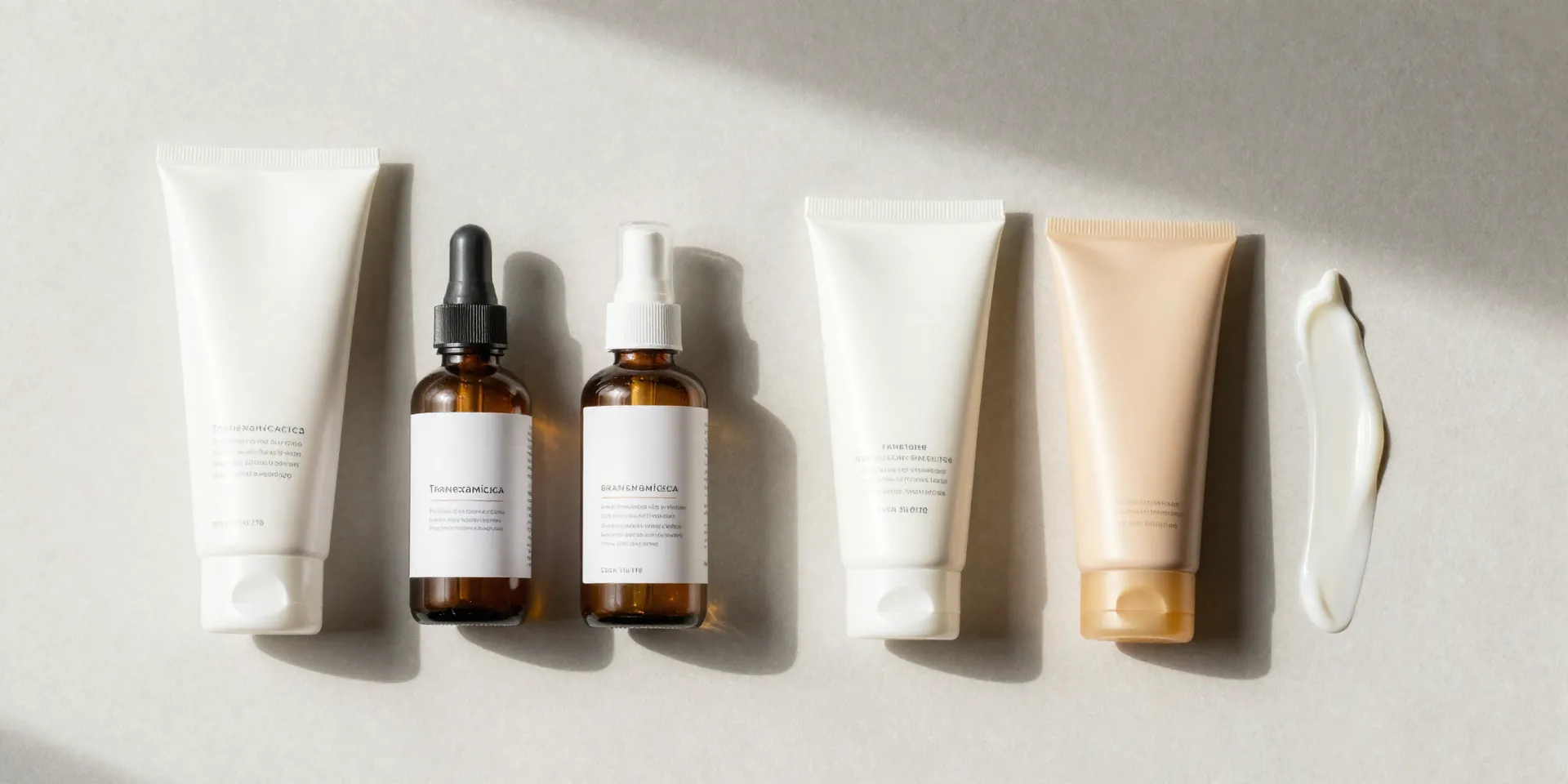
If you want the benefits without the backlash, keep the routine boring and strategic. Apply tranexamic acid after cleansing and before moisturizer, usually once a day to start. Night is an easy place to put it, especially if your morning routine already includes sunscreen and maybe vitamin C. If your skin is very reactive, start every other night for two weeks, then increase if everything stays calm. That slow start can save you from the classic mistake of assuming more frequency means faster fading. It usually just means more inflammation.
Pairing matters too. Tranexamic acid often works nicely with barrier-friendly ingredients like niacinamide, ceramides, glycerin, and panthenol. Those combinations make a lot of sense for a sensitive skin treatment because they help reduce the chance of irritation while you work on pigment. Be more careful with stacks that include strong exfoliating acids, benzoyl peroxide, or prescription-strength retinoids, especially if your skin is already dry or sting-prone. You may still be able to use them, just not all at once. And sunscreen is non-negotiable. If you’re treating age spots without daily broad-spectrum SPF, you’re basically mopping the floor while the tap is still running.
How It Compares With Other Anti-Aging Ingredients for Spot Fading
For age spots, tranexamic acid sits in a very useful lane. It’s not the strongest resurfacing ingredient, and it’s not the most famous antioxidant, but it’s one of the better anti-aging ingredients for people who care about discoloration and can’t tolerate harsh routines. Vitamin C can brighten beautifully, but some forms sting. Retinoids can help with pigment and texture, but sensitive skin often needs months of careful adjustment. Hydroquinone can work fast for some people, yet it’s not the first thing many want to reach for, especially without guidance. Tranexamic acid is often the calmer option in the room.
Azelaic acid is probably its closest cousin in spirit: both can support brighter, more even skin without the full chaos of a peel-heavy routine. Niacinamide is another helpful teammate, especially if your skin barrier is shaky. The main difference is focus. Niacinamide is broad and supportive. Tranexamic acid is more directly associated with pigment pathways. So if your top complaint is age spots rather than dullness in general, tranexamic acid deserves a serious look. Not because it’s trendy, but because it solves a specific problem in a way that often respects sensitive skin instead of bulldozing through it.
When to Expect Results and the Red Flags That Mean Stop
Most people need patience. Realistically, you’re looking at around eight to twelve weeks for visible improvement, sometimes longer if the spots are stubborn or your routine has to stay very gentle. That timeline can feel annoyingly slow, but it’s pretty standard for pigment care. Fast results are often sold with aggressive formulas, and aggressive formulas are exactly what sensitive skin tends to hate. If your skin is staying calm and the spots are slowly softening at the edges or looking a little lighter, that counts as progress.
What you don’t want is a steady rise in burning, itching, dry patches, or redness that lasts beyond the first few uses. Sensitive skin doesn’t always need to “push through.” Sometimes it needs you to stop being stubborn. If a tranexamic acid product keeps causing irritation, back off and check the whole formula, your frequency, and whatever else you’re using alongside it. And if a dark spot is changing shape, becoming raised, bleeding, or looking noticeably different from the rest, skip the self-experiment and get it checked. For ordinary age spots, though, tranexamic acid is one of the more sensible ways to chase brighter skin without picking a fight with your face.